

Grief as a Gateway to Grace
The Five Stages Through the Lens of A Course in Miracles
By Dehyana
I didn’t come to understand grief through theory. I came to it through life. Loss has been one of my greatest teachers—quietly dismantling who I thought I was, how I believed life should unfold, and what I thought I could control. There were seasons when the ground gave way beneath me, and the only thing left was presence.
During my deepest grief, A Course in Miracles didn’t comfort me—it challenged me. At times, it even made me angry. But it stayed. And slowly, in its own way, it began asking different questions than the ones my grief was asking.
What follows is not a formula for healing or a set of stages to complete. It is a compassionate lens through which to view grief—a spiritual perspective on the five stages of grief that honours the nervous system, the soul, and the quiet guidance that remains available even in the midst of loss.
I offer this as a companion, not a solution. If it helps you feel less alone, less rushed, or more gently held as you walk with grief, then it has done its work.
I write this as a mother who has lost a child to suicide, and as someone learning—still—how to live honestly in the presence of grief.
We Are All Grieving Something
We are all grieving something. The death of a loved one. A marriage that ended. A job, a calling, a homeland. The loss of innocence. The loss of who we thought we were going to be. Most people don’t realise they’re grieving. They call it anger. Or anxiety. Or exhaustion. They feel it lodged in their shoulders, their chest, their gut—but they don’t have language for it.
Yet grief, when unnamed, has a way of living in the body and shaping our lives quietly from the inside—affecting the nervous system, energy levels, and emotional resilience.
A Course in Miracles offers a radical reframe:
“Nothing real can be threatened.
Nothing unreal exists.
Herein lies the peace of God.”
Through that lens, grief is not an enemy, and it is not something to “get over.” It is a threshold—grief as a spiritual path—one that can return us to Love when we’re willing to walk through it consciously.
What follows are the five stages of grief, not as a checklist or a timeline, but as a spiral—one we revisit as we learn how to live with loss rather than resist it.
Denial: When the Nervous System Needs Time
Denial — “This can’t be happening.”
Denial is not weakness. It is the nervous system buying time.
When loss arrives—whether through death, divorce, illness, or sudden change—something in us says, This isn’t real. Not because we’re avoiding truth, but because truth has arrived faster than we can integrate it.
From the perspective of A Course in Miracles, denial reflects confusion about what has actually been lost. The ego believes loss is total and permanent, so it freezes. Spirit knows otherwise. What we lose is form—not essence.
Denial begins to soften when we stop demanding immediate understanding and instead ask for a new way of seeing.
“I will not value what is valueless.” (W-133)
Shift: When resistance eases, we begin to sense that something essential remains—even as life looks irrevocably different.
Anger: Grief Without Language
Anger — “This isn’t fair.”
Anger often arrives when grief has nowhere to go. We may feel angry at people, institutions, God, or ourselves. But beneath the heat is heartbreak—and beneath the heartbreak is love that has been disrupted.
A Course in Miracles teaches that anger is never the truth of what we feel; it is a cover for pain and guilt.
“Anger is never justified.” (T-30.VI.1)
When grief is unnamed, it hardens. When anger is judged or suppressed, it turns inward and lodges in the body—tight jaws, clenched shoulders, chronic tension, fatigue.
Shift: When anger is met with honesty rather than shame, it reveals the grief underneath. And grief, once named, begins to move.
Bargaining: The Mind’s Attempt at Control
Bargaining — “If only…”
Bargaining is the mind trying to regain control. If only I had said something sooner. If only I had known. If only I had chosen differently.
This stage appears whenever life diverges from our expectations. The ego believes peace comes from rewriting the past. A Course in Miracles gently corrects this illusion.
“The healed mind does not plan.” (W-135)
Bargaining keeps grief suspended in time. Surrender allows conscious grief healing to begin.
Shift: Peace returns when we stop negotiating with what already is and begin trusting that meaning can still be revealed—even now.
Depression: Rest, Not Failure
Depression — “I don’t know how to go on.”
This is the stage most misunderstood—and most avoided. Depression is not always pathology. Often, it is the soul asking for rest.
When identity structures fall away, energy withdraws. The body slows, attention turns inward, and the inner life becomes primary. In a culture that worships productivity, this is seen as failure. In truth, it can be sacred.
“I rest in God.” (W-109)
So much grief becomes chronic because this stage is rushed, medicated, or judged. When allowed, this stage becomes a womb rather than a tomb—a place where false selves dissolve and something truer begins to form.
Shift: When depression is met with compassion instead of urgency, it becomes a doorway into deep surrender and quiet devotion.
Acceptance: Living with Loss, Not Erasing It
Acceptance — “This is part of my life now.”
Acceptance doesn’t remove grief—it transforms it into presence, compassion, and a deeper capacity to love life as it is. It is not forgetting, and it is not about being “over it.”
From an ACIM view of grief, acceptance is where loss becomes integrated rather than erased.
“Love holds no grievances.” (W-68)
We carry what we’ve lost differently now. With humility. With depth. With wisdom shaped by experience rather than theory.
Shift: Acceptance doesn’t remove grief—it transforms it into presence, compassion, and a deeper capacity to love.
The Spiral of Healing and the Undoing of Fear
Grief does not move in straight lines. It spirals. We revisit old feelings with new awareness. What once felt like devastation becomes initiation. What once lived in the body as tension begins to release. What once felt like loss reveals meaning.
A Course in Miracles teaches that healing is the undoing of fear. Grief, when allowed and loved, undoes one of the deepest fears of all—the belief that we are separate and alone.
If you are carrying grief—named or unnamed—know this:
Your body is not failing you, your emotions are not a problem to solve, and your grief is not a sign of weakness.
It is a signal that something meaningful has passed through your life. Grief doesn’t disappear—but neither do you. You grow around it. You learn how to walk with it. And one day, you realise it is no longer only sorrow—it has become a doorway back into life.
With love,
Dehyana
If you’re moving through grief and feel called to walk with someone who understands its depth and its rhythms, I offer private guided spiritual recovery sessions.
About The Author
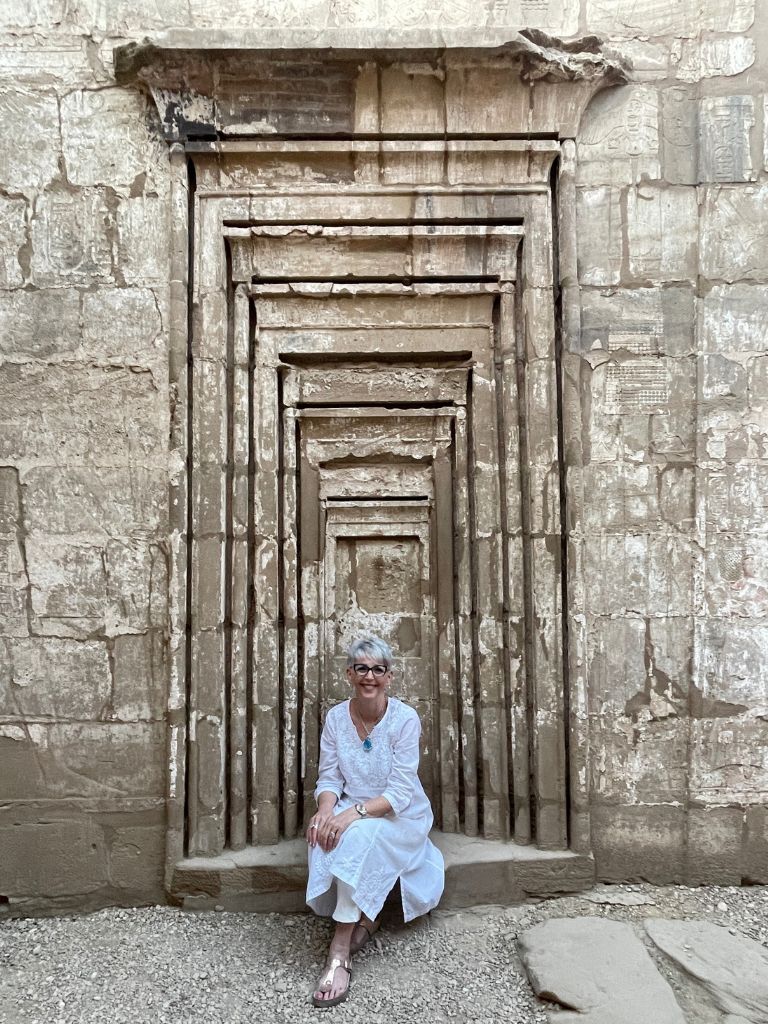
Dehyana has been leading spiritual journeys to Egypt for over two decades, supporting seekers in understanding their soul contracts, mirrors, and deeper purpose. Her teachings blend astrology with the timeless wisdom of ancient Egypt.
If Egypt has been calling you, learn more about our 2026 Luxury Spiritual Tour — a journey into the heart of who you are.
Leave A Comment